DESTINATION RESTAURANTS
May 25, 2026
The Destination Restaurant of the Year 2026
Kesennuma Kuromori
By TAEKO TERAO


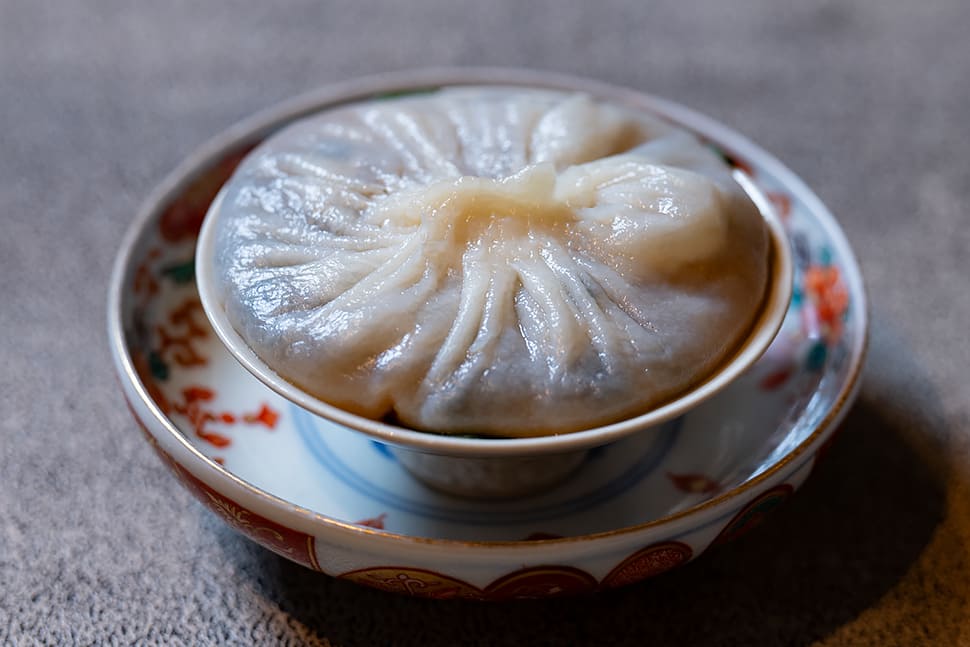
Among the 10 establishments listed as this year’s Destination Restaurants, the shark fin (fukahire) restaurant Kesennuma Kuromori in the Miyagi Prefecture city of Kesennuma was selected by unanimous decision as the representative Destination Restaurant of the Year 2026.
Kesennuma is among the areas that suffered the worst devastation in the Tohoku earthquake and tsunami of March 11, 2011. Its population was on a downward trend even before the disaster and has continued to decline, currently numbering around 54,000. It is said that over half of the city’s dining establishments lost their storefront locations due to the tsunami, which reached a height of 22 meters in the city. Since then, restaurants have been reopened or newly opened and the townscape is reviving, but in terms of street life and activity, the undeniable impression is that of an area still on the road to recovery. This is a region, moreover, that had few fine-dining restaurants to begin with. In such a location, offering a course menu priced at over ¥30,000 ($200) could be called an adventure in itself.
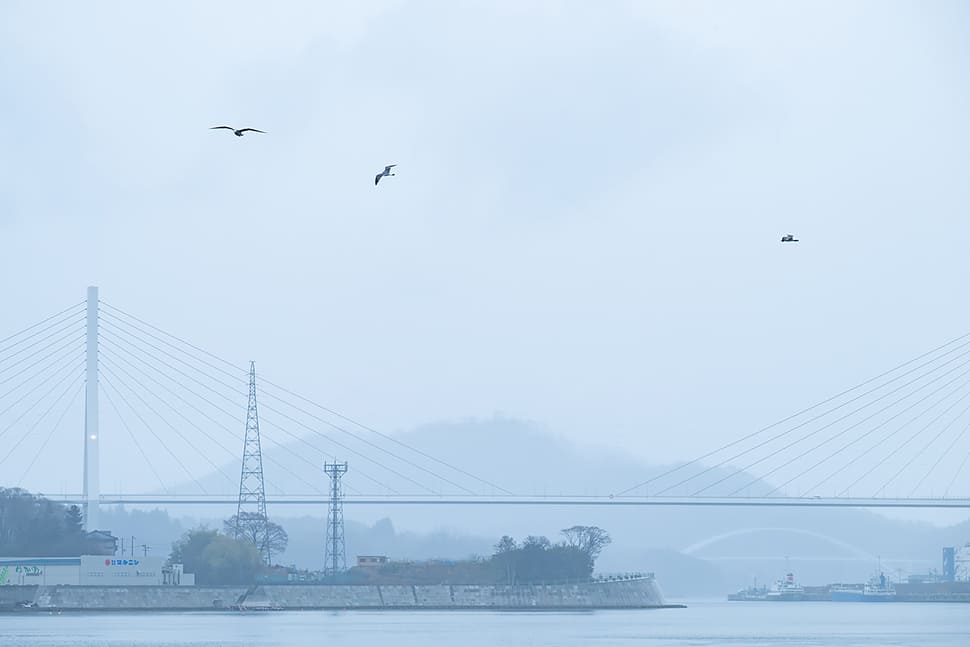
From Ichinoseki Station on the Tohoku Shinkansen line, an hour’s drive will take you to Hotel Ikkeikaku, the location of Kesennuma Kuromori, near Kesennuma’s port and fish market. On buildings around the city, signs indicate the water level at the time of the tsunami, and on the hotel’s outer wall is a red line showing that waves reached the upper part of the second floor. Indeed, the sea has frightening power. But it also brings many gifts.
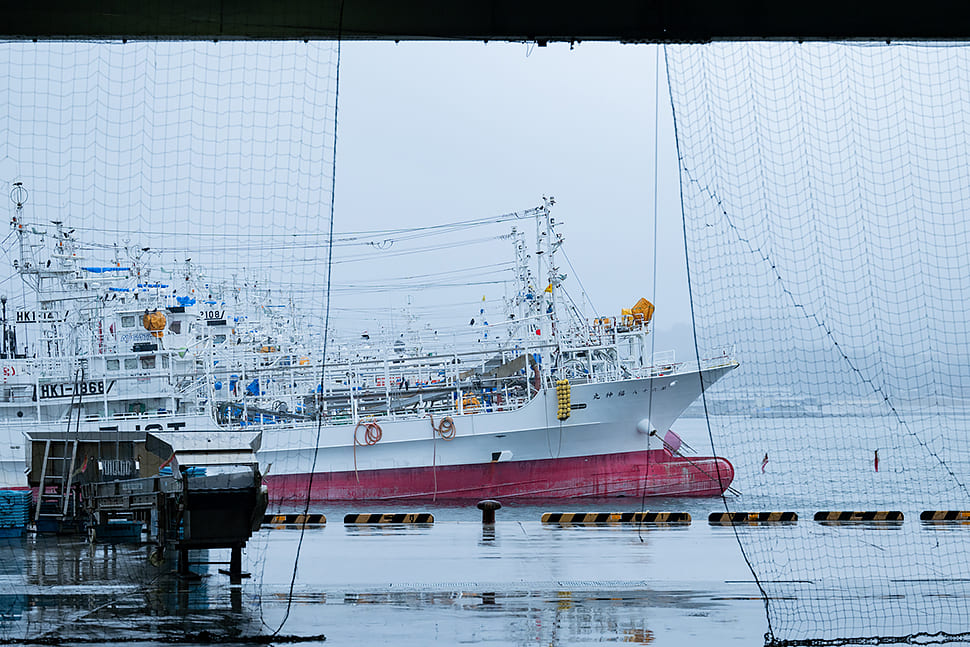
The city of Kesennuma faces the Pacific. The offshore area called Sanriku-oki, an abundant fishing ground at the intersection of the Kuroshio and Oyashio currents, is known as one of the world’s three largest fishing locations. Kesennuma’s port is filled with large deep-sea fishing vessels. Because of the coastline’s complex topography, with many inlets called “rias,” Kesennuma Bay is blessed with calm, plankton-rich waters where fish thrive and where deep-sea fishing and oyster and scallop farming are flourishing industries. In other words, this is an ideal place to offer fish and seafood cuisine. In particular, as the area boasts the largest volume of shark landings in Japan, there is surely no better location for creating cuisine that focuses on shark fin.
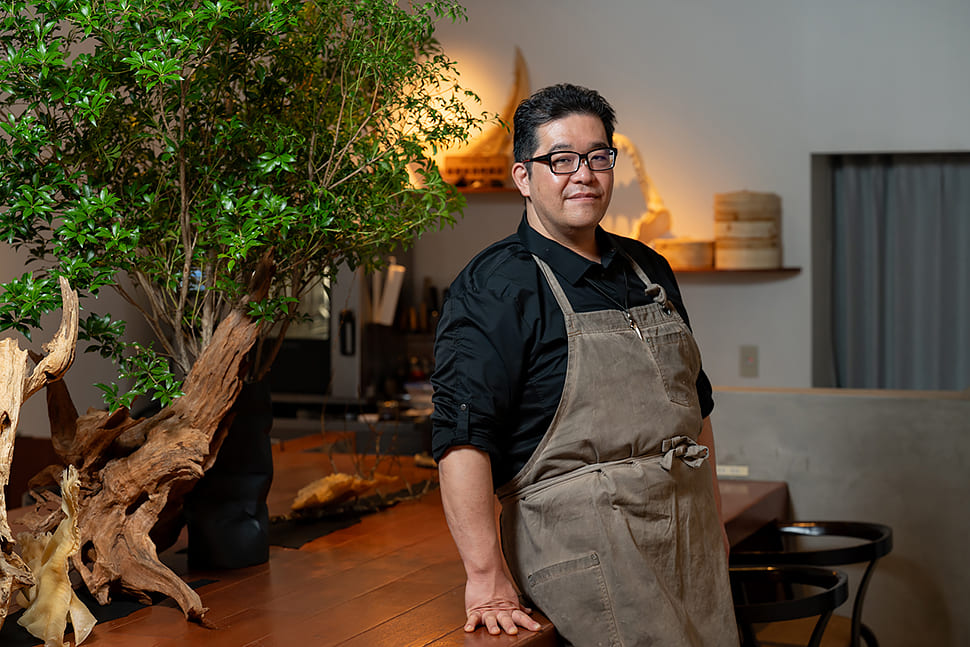
The restaurant’s chef, Yoji Kuromori, was born in Kanagawa Prefecture and grew up in Hokkaido. At the age of 21 he moved to Tokyo, where he started his culinary career at a Chinese restaurant. It was the Great East Japan Earthquake that prompted his decision to relocate to Miyagi Prefecture.
Kuromori said: “I had a friend in Miyagi Prefecture. After March 11, 2011, I wasn’t able to get in touch with him for two months and I was worried. And just at that time, he appeared one day at the gyoza restaurant that I was running in Tokyo. He said, ‘Why don’t you make great food like this for people in Miyagi Prefecture?’ I felt like I wanted to help if I could, and almost on impulse I moved to Sendai, in Miyagi Prefecture, in October of that year. Of course, I also had in mind the fact that Miyagi Prefecture is one of the world’s leading production areas for shark fin, dried abalone and dried sea cucumber, all of which are luxury foods used in Chinese cuisine.”
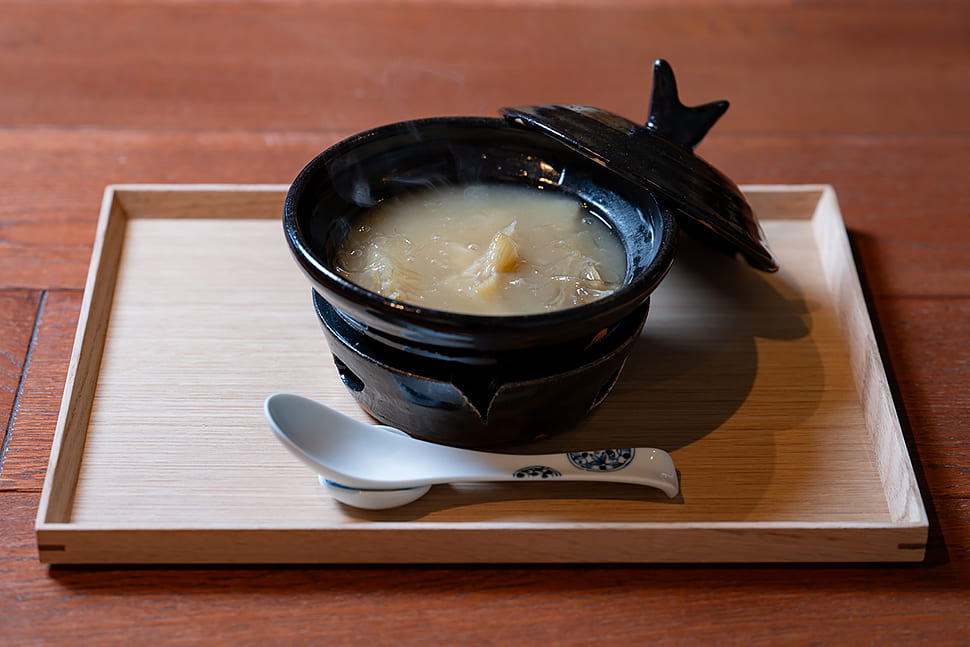
The following month, he opened a neighborhood Chinese restaurant serving dishes such as simmered shark fin in addition to gyoza. It was an instant hit, with people lining up outside. But Kuromori subsequently became ill and turned the Chinese restaurant over to his friend, then spent about a year doing catering work and visiting food production areas.
“Before long, I started receiving requests for luxury course meals that included shark fin and abalone,” said Kuromori. “Word got around, and someone told me, ‘There are people who are waiting for the dishes you make.’ So in 2014, I opened Kuromori in Sendai with the guiding concepts of shark fin cuisine and ‘local production for local consumption.”
Initially, lunch was priced at ¥1,800 and dinner at ¥3,500, but Kurumori was told, “Don’t sell yourself short.” He raised the course prices to ¥12,000 and up when he relocated and reopened in 2016, and then to ¥22,000 and up at the time of his subsequent relocation in 2019, all the while expanding and refining his menus.
Then, in September of 2025, he opened the long-awaited Kesennuma Kuromori. Chef Kuromori runs the kitchen by himself. His wife, Yayoi, is responsible for service.
Explaining the reasons for his move to Kesennuma, Kuromori said, “The success of my restaurant in Sendai helped establish the idea that Kuromori is synonymous with shark fin. I was starting to feel strongly that I wanted to give back more to Kesennuma, the shark fin production area — and in a stroke of fate, that was when I received an offer to open a restaurant on the first floor of Hotel Ikkeikaku. Actually, a lot of my friends are chefs who have been recognized by Destination Restaurants, and all of them see a special meaning in creating dishes in a specific area. When I asked myself, ‘What about me?’ I realized that, to me, Kesennuma itself is a place where there is meaning in making cuisine.”
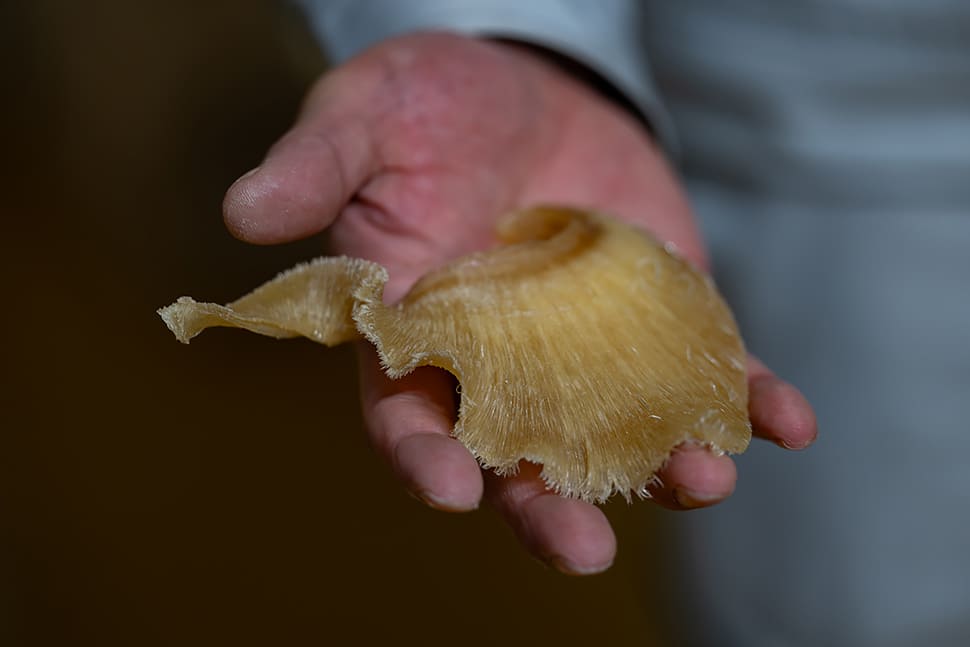
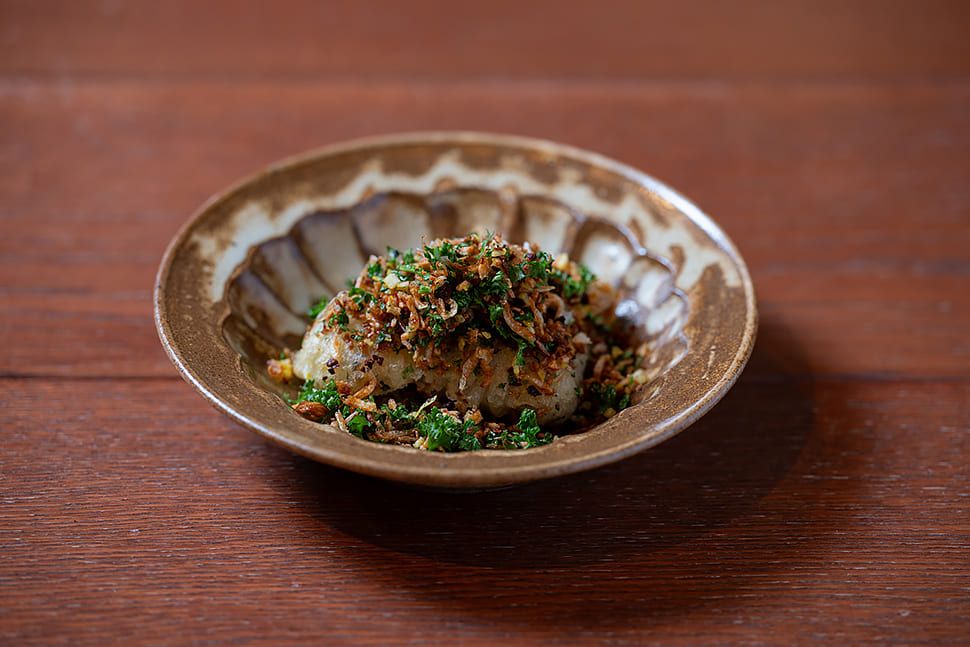
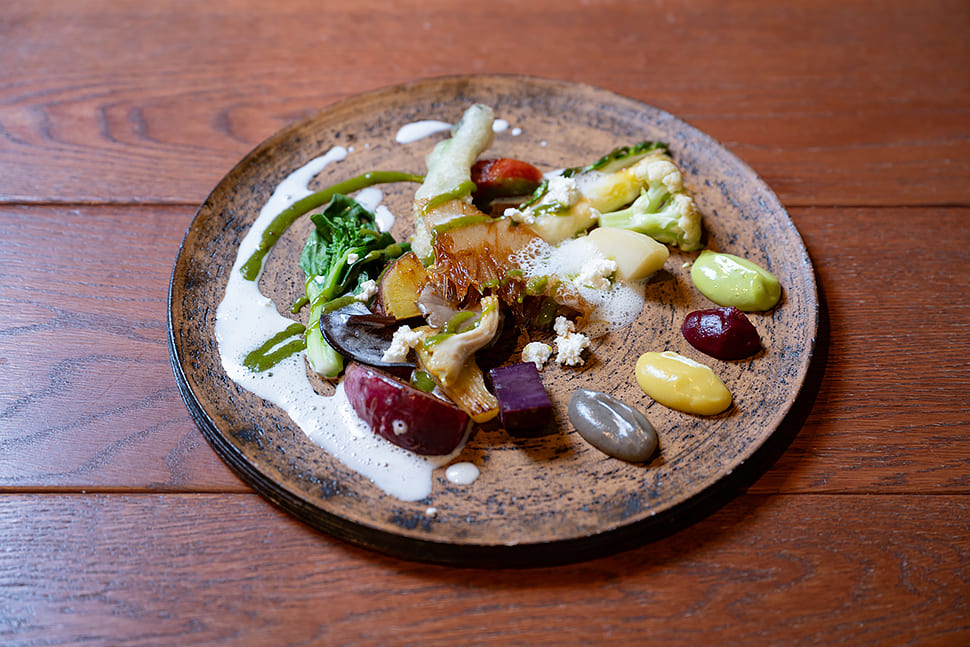
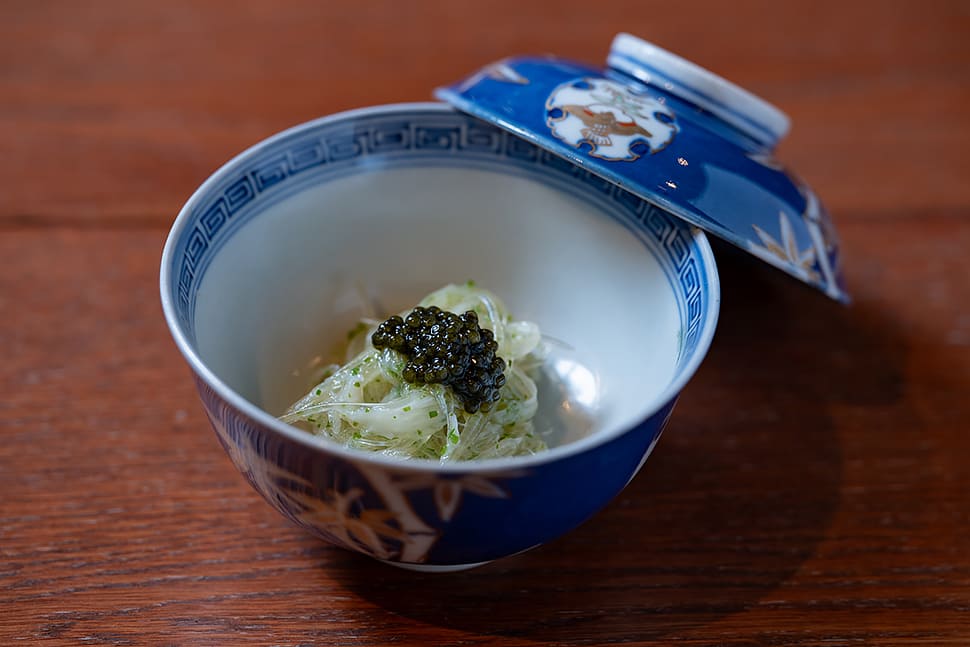
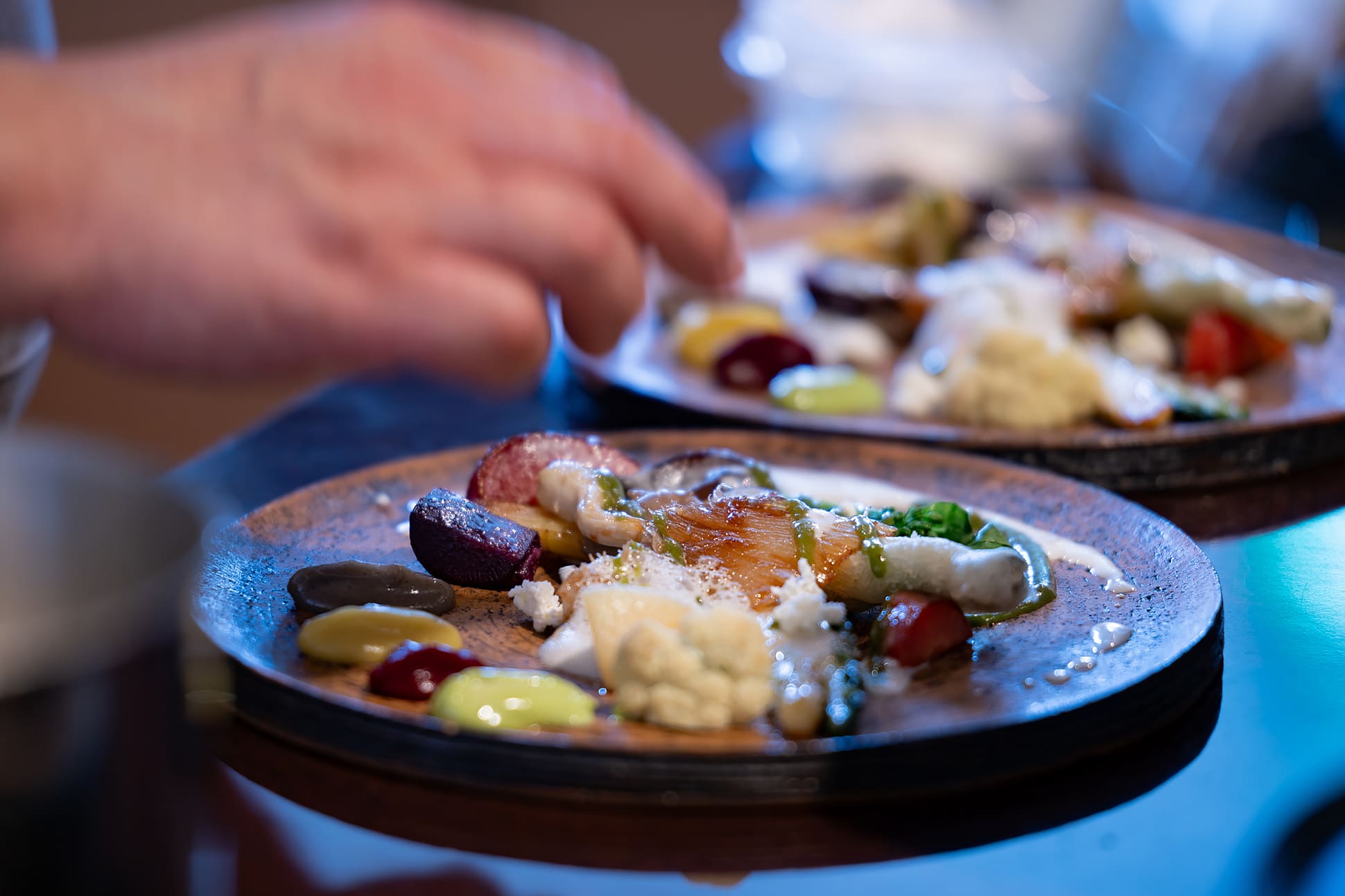
The ¥33,000 course menu created by Kuromori features various types of shark fin with differing flavors and textures, including the tail fin, pectoral fin and engawa (dorsal fin muscle) from four types of shark — shortfin mako, salmon shark, blue shark and hammerhead. The course menu priced at ¥49,500 additionally includes cuisine featuring Yoshihama Kippin dried abalone, which is known for its extremely high quality. On a foundation of Chinese cooking methods, from soups to frying, grilling and simmering, dishes combining local ingredients make a strong impact, but always leave an impression of delicacy. One reason is that Kuromori does not use the high-heat ranges common in Cantonese cuisine, as high-temperature heat sources are considered unnecessary in preparing shark fin, which contains easily melted collagen. This is cuisine with the power to draw people from Japan and around the world. “I want to make Kesennuma a city of outstanding cuisine, like San Sebastian in Spain,” said Kuromori. His dream has just begun.
One of the criteria considered in The Japan Times’ Destination Restaurants selection is whether a restaurant has the capacity to contribute to regional revitalization through cuisine. And one aspect of this question is whether the restaurant coexists in a positive way with its surroundings, including the natural environment. In these circumstances, there may be quite a few readers who feel uncomfortable with this year’s selection of Kesennuma Kuromori, a shark fin specialty restaurant in the Miyagi Prefecture city of Kesennuma, as Destination Restaurant of the Year — the establishment singled out among the 10 honorees as the year’s representative restaurant. The reason is that in recent years there has been a growing tendency worldwide to view shark fin consumption as ethically problematic in terms of marine ecosystem protection and animal welfare.
Various international organizations have established agreements concerning shark conservation and management and have regulated shark fin fishing. These include the United Nations’ Food and Agriculture Organization in 1999 and, in 2010, the U.N. Bonn Agreement and the Washington Convention (CITES). Additionally, shark fin sales and possession have been banned in a number of American states, and an import prohibition has been enacted in the United Kingdom. As a result of increasing anti-shark fin sentiment in Europe and America, it was announced in 2012 that shark fin would not be served at government-related dinners and banquets in Hong Kong, the world’s largest shark fin consumer and distribution hub, and the same policy was announced in mainland China in 2013. This movement has spread to private enterprise, with a sharp increase in the number of businesses that have stopped serving and importing shark fin, including luxury hotels and airlines.
Though this trend continues even now, the Japanese government has been taking a wait-and-see approach. One reason is that, while over 100 of the 500-plus shark species are endangered, the extinction risk for blue shark, shortfin mako and other shark species landed in Kesennuma (Japan’s largest shark fin production area) is extremely low. Japanese fishermen, moreover, do not engage in the cruel practice of finning — removing only the fin and discarding the rest of the shark into the sea. Viewed in this light, the anti-shark fin movement that began in Europe and America could even be regarded as a case of unfounded rumors causing reputational harm.
Ishiwata Shoten, which wholesales shark fins to Kesennuma Kuromori, has been processing and selling shark fins in
Kesennuma for over half a century. Hisashi Ishiwata, the company’s third-generation owner and current president, explained how sharks caught in fishing are utilized in Kesennuma without any waste.
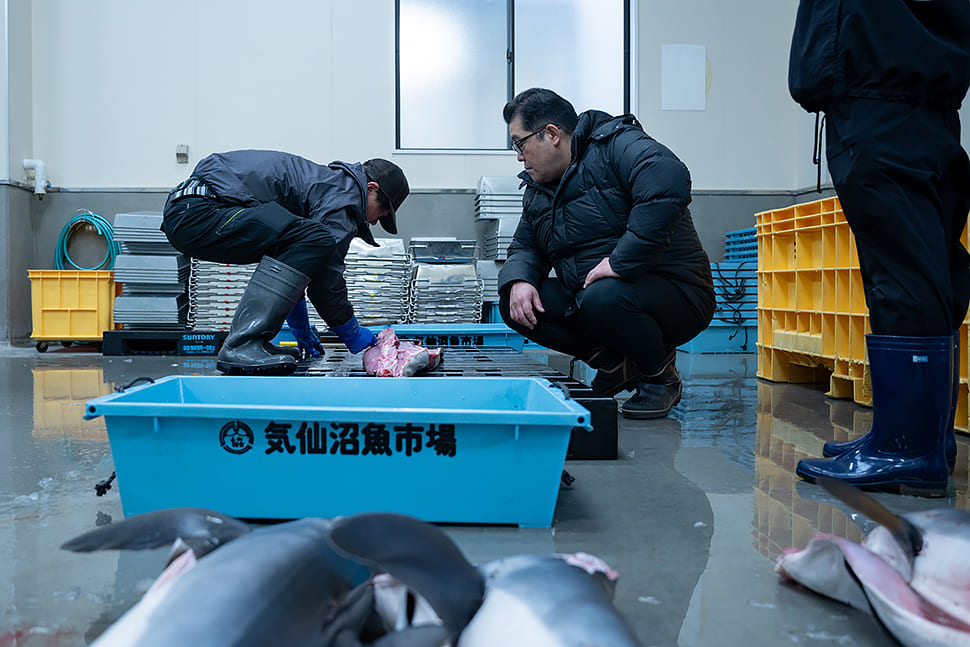
“Tuna fishing has flourished in Kesennuma for many years. When longline fishing is used to catch tuna, sharks go into the net, too. Kesennuma’s shark-processing industry has been reorganized to make the most productive use of these sharks. The tail fins, dorsal fins and so on are used in shark fin cuisine. Shark leather can be used as well. Actually, at the G7 science and technology ministers’ meeting held in Sendai in 2023, there was a great deal of interest when Prime Minister Sanae Takaichi (who was then Japan’s minister of science and technology) wore shark-leather high heels produced as an initiative for recovery from the Tohoku earthquake. In addition, shark meat is used in fish paste products and pet food, the organs are used in liver oil, the bones are an ingredient in supplements — nothing is wasted, so almost nothing is discarded.”
Kesennuma Kuromori’s chef, Yoji Kuromori, shared his thoughts about shark fin cuisine.
“In Kesennuma, shark fin has long been an important industry. Starting in the Edo Period, shark fins, dried sea cucumbers and dried abalones, known as tawaramono sanhin (the three baled products), were exported from Nagasaki to China in straw bales. Concerning shark fin, what the people of Kesennuma have accomplished through ingenuity is something truly sustainable, and it has been my mission to open a restaurant here and share this history. Shark fin is a dried food, and it takes knowledge and experience to skillfully rehydrate and cook it, so it isn’t something that just anyone can do. I prepared these ingredients when I worked at high-end Chinese restaurants in Tokyo, and that experience has been really useful.”
Ever since they met over a decade ago, chef Kuromori and producer Ishiwata have been working together to enhance the value of shark fin.
Until the 1960s or 1970s, the usual method for preparing shark fins was to dry the fins after salt-pickling them with the skin still on. But Ishiwata’s grandfather devised the method of removing the skin and bones while the fins were still fresh, then drying them. This is now the standard method throughout the world.
Ishiwata expressed his thoughts this way: “Shark fin processing techniques have gradually been improving, and we’re now exploring the next stage. Sharks in the ocean are the same around the world, but the quality of the products differs according to the fine details of processing. The product quality in countries that treat shark fin as simply a type of work or an investment is completely different from the quality of products in Kesennuma, where shark fin is treated with real respect as a food. After visiting processing plants in Indonesia, Spain and quite a few other countries, I’m certain that the quality of Kesennuma shark fin, including freshness and safety, is the highest in the world. And if that quality is combined with the skill of a chef like Mr. Kuromori, the value is bound to increase even more.”
Kuromori then explained, “Most Chinese restaurants that offer shark fin serve only tail fin. But the course menu at our restaurant includes pectoral fin, dorsal fin, engawa (dorsal fin muscle) and so on from four different shark species — nine types of shark fin in all. When chefs come to dine at the restaurant as guests, they discover a new delight in shark fin — and within a week, Ishiwata Shoten receives an order for various shark fin parts.”
Kuromori continued, “Kesennuma’s Pacific saury and bonito are famous too, but they aren’t necessarily a powerful draw in terms of bringing in overseas visitors. On the other hand, Kesennuma is the only place where dishes featuring shark fin, a luxury ingredient in Chinese food, can be eaten as ‘locally produced and locally consumed’ cuisine. Today the consumption of shark fin is restricted internationally, and for that very reason I think it’s entirely possible that celebrities will turn their attention to this area and come here to experience the cuisine. If I do everything I should, people will surely come here from everywhere in the world.”
Even if population decline is significant, an increase in the tourist population will benefit the area. Kesennuma works together as a community in handling sharks sustainably, and if its initiatives expand beyond the ocean, the environment around shark fin may change as well. Chef Kuromori is at the front line of these efforts.
Hotel Ikkeikaku, 1-4-7 Benten-cho,Kesennuma-shi, Miyagi Prefecture