DESTINATION RESTAURANTS
May 25, 2026
Ohtsu


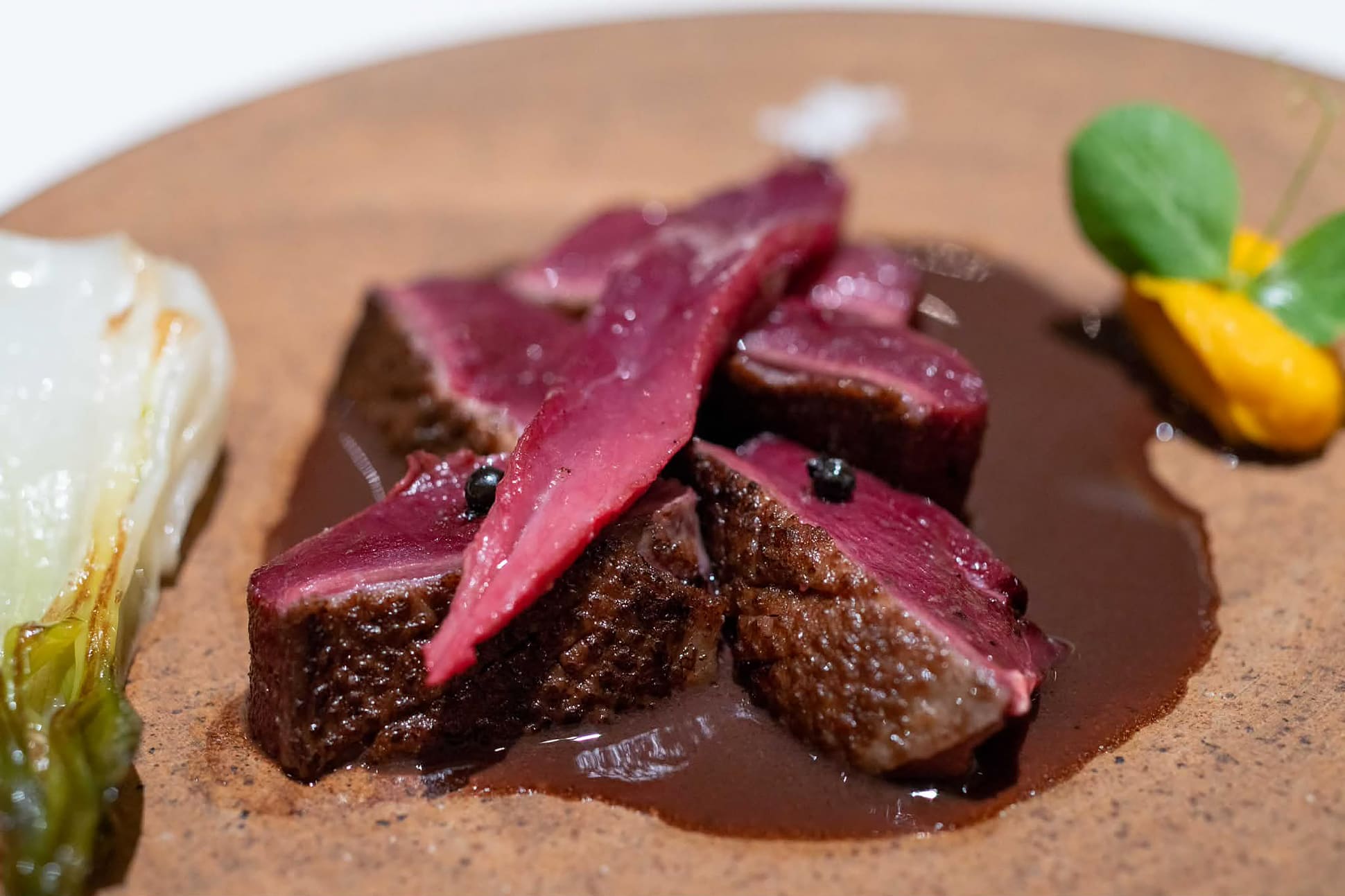
Although every prefecture promotes tourism through cuisine, Ibaraki’s initiatives have been particularly ambitious. In a program called Ibaraki Food Selection launched in 2020, a committee including culinary experts and chefs selects “Ibaraki restaurant treasures” that make worthy travel destinations. Probably due in part to this initiative, chefs spanning diverse cuisines have been engaging in collaborative projects, enhancing one another’s work, and the prefecture is attracting attention as a new gastronomy hub.
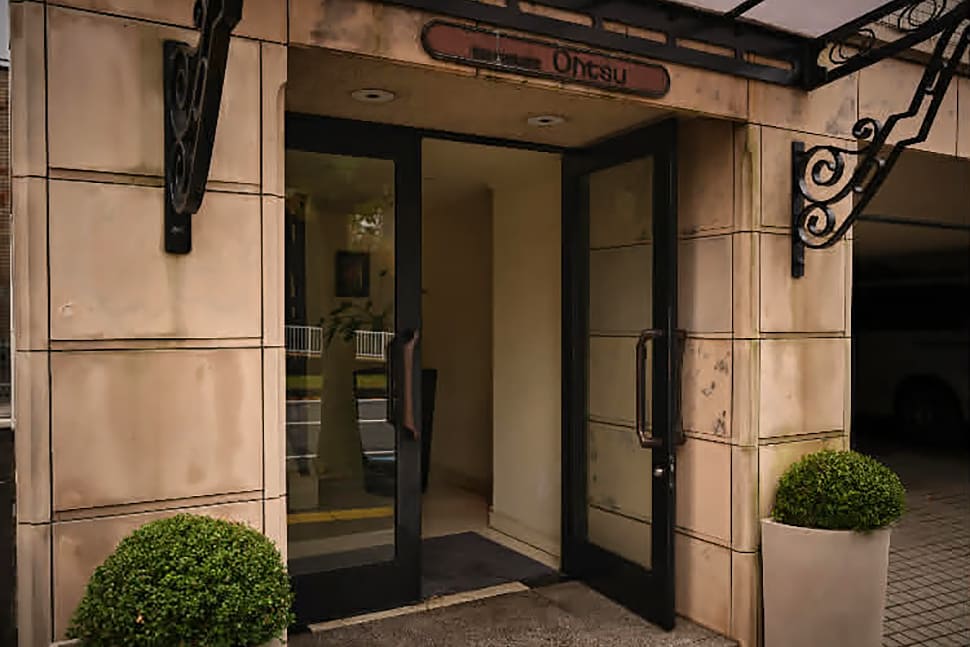
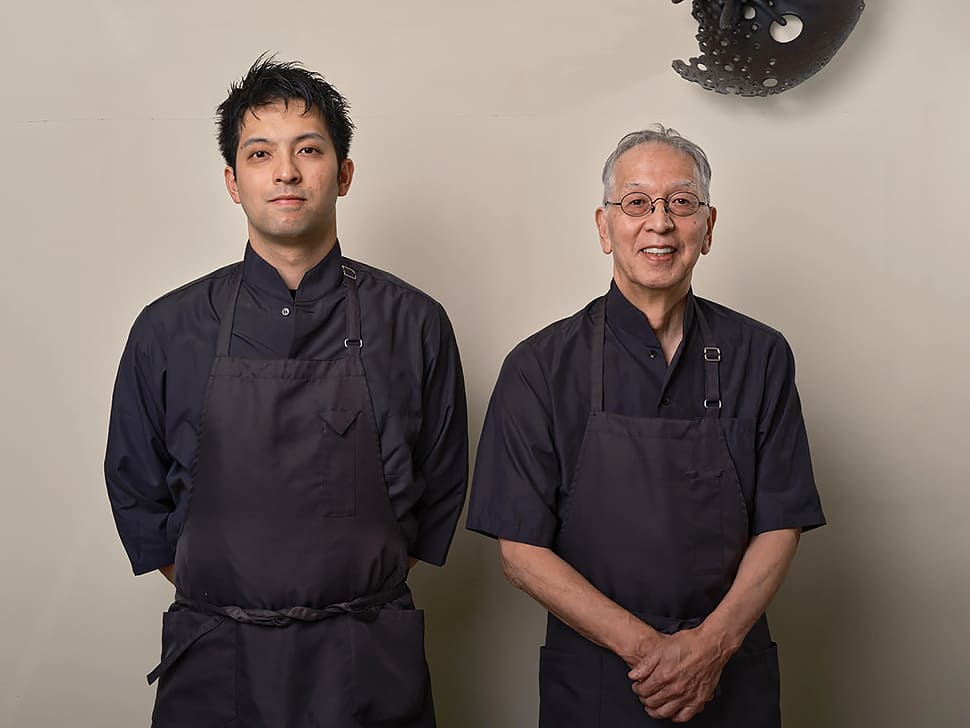
The French restaurant Ohtsu, established in 1991 by owner-chef Takashi Ohtsu and his wife, Emiko, has been a selected Ibaraki restaurant treasure since 2020. Now a fine-dining restaurant, it began in 1983 as a casual brasserie. It all started when Ohtsu, then 35, quit his job as a food company buyer, delved more deeply into his hobby of exploring various restaurants, and then became a chef himself.
Ohtsu said: “I started the brasserie in the city of Hitachi, where my wife’s family home is located. My only previous training was helping out for several months at a yōshoku (Western-style Japanese) restaurant run by an acquaintance. After I opened my restaurant, I bought books that teach the fundamentals of French cuisine, and studied.”
Having started the brasserie as an inexperienced chef, Ohtsu relocated in 1991 to the current location in Mito and opened Ohtsu. The restaurant’s guiding concept was to offer guests the experience of first-rate French cuisine without needing to travel to the Tokyo area. Ohtsu also started serving luxury ingredients such as foie gras and caviar.
“On the other hand, I didn’t know how to cook truffles,” he said. “And in those days we didn’t have the internet. After some thought, I phoned (the French restaurant) Apicius in Yurakucho, Tokyo, and the head chef at the time, Tokuo Takahashi, taught me how to use truffles.” Ohtsu continued studying on his own and honing his skills in French cuisine, and Ohtsu became a restaurant well known in Mito.
In 2014, his second son, Takaaki, started working at the restaurant, where he is now sous-chef. Like his father, he had no prior training in French restaurants.
Telling the story of how he became a chef, Takaaki said: “When I was working part time in a pizza restaurant in Tokyo after dropping out of university there, I had the sakura shrimp pasta at Ohtsu. I thought, ‘How can you make such delicious broth?’ I was interested. It turned out the broth was made from langoustines (scampi). After that I started working with my father.”
Then came a major turning point in Takaaki’s life. In 2022, he was awarded the Bronze Egg in the culinary competition RED U-35, which is known as a gateway to success for young chefs.
He said, “I had a complete change of consciousness. It was around that time that I truly started being mindful of local ingredients.”
And with Ohtsu now honored as a 2026 Destination Restaurant, Takaaki’s process for selecting ingredients has evolved further. Takaaki said he had an epiphany when Harutomo Hagi, the owner-chef of the innovative restaurant Hagi in Fukushima Prefecture, the Destination Restaurant of the Year 2023, told him that none of the Destination Restaurants used imported caviar. Since then, the ratio of Ibaraki products appearing in Ohtsu’s course menu has increased to almost 100%.
Ibaraki has always been a major region supplying food products to the Tokyo area. Fresh, high-quality vegetables and meat are readily available. While Ohtsu’s cuisine has changed continually since its founding, the biggest change in the past few years has probably been in its fish dishes. Through the strengthening of connections with local fishermen, the creative range has broadened.
Takaaki’s eyes lit up as he said, “We used to buy only as much fish as we could use at the restaurant, but now we purchase everything the fishermen bring us, at the asking price. This builds trust, so when the amount is too large for the restaurant service, I use the rest to try out new ideas for dishes.”
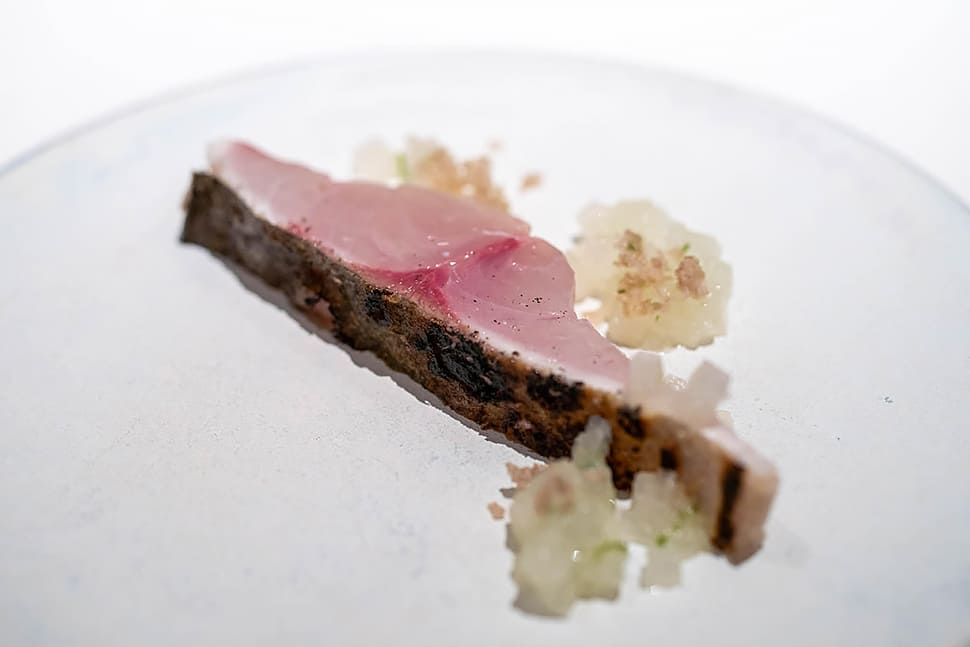
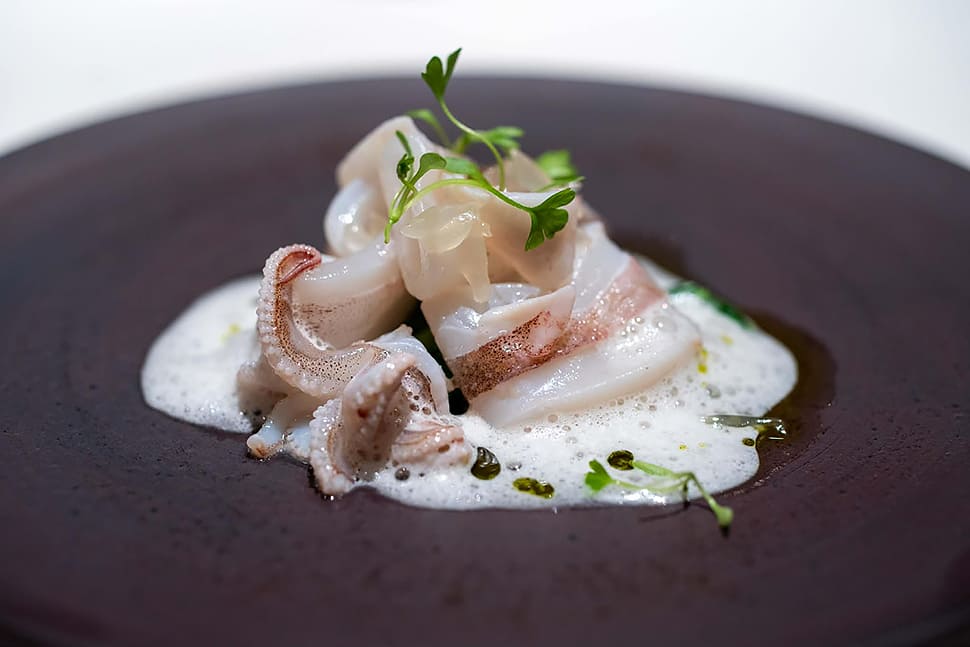
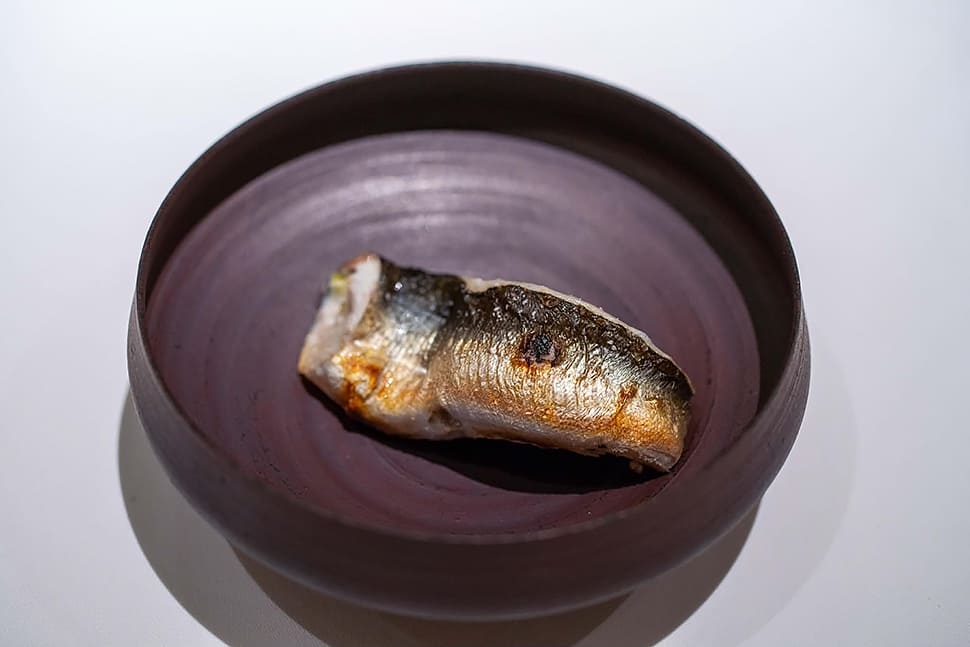
Fish from the Joban region, which includes Ibaraki, has different characteristics from fish caught in other areas. Since it tends to become too soft when cooked with standard methods, it is cooked very briefly while extremely fresh and served virtually raw. Ishidai (barred knifejaw) seared only on the skin side over binchōtan charcoal could be described as slightly warm carpaccio. The moist skin and lightly melted fat produce a new and superb flavor. Hirame (Japanese flounder) pan-seared only on the skin side is also served nearly raw. Both are characteristic of Ohtsu’s unique fish dishes, a type of cuisine rarely encountered in standard French cooking.
■Sustainable Japan Magazine (Sustainable Japan by The Japan Times)
https://sustainable.japantimes.com/magazine/vol57/57-03
1-5-4 Shiraume, Mito-shi, Ibaraki Prefecture